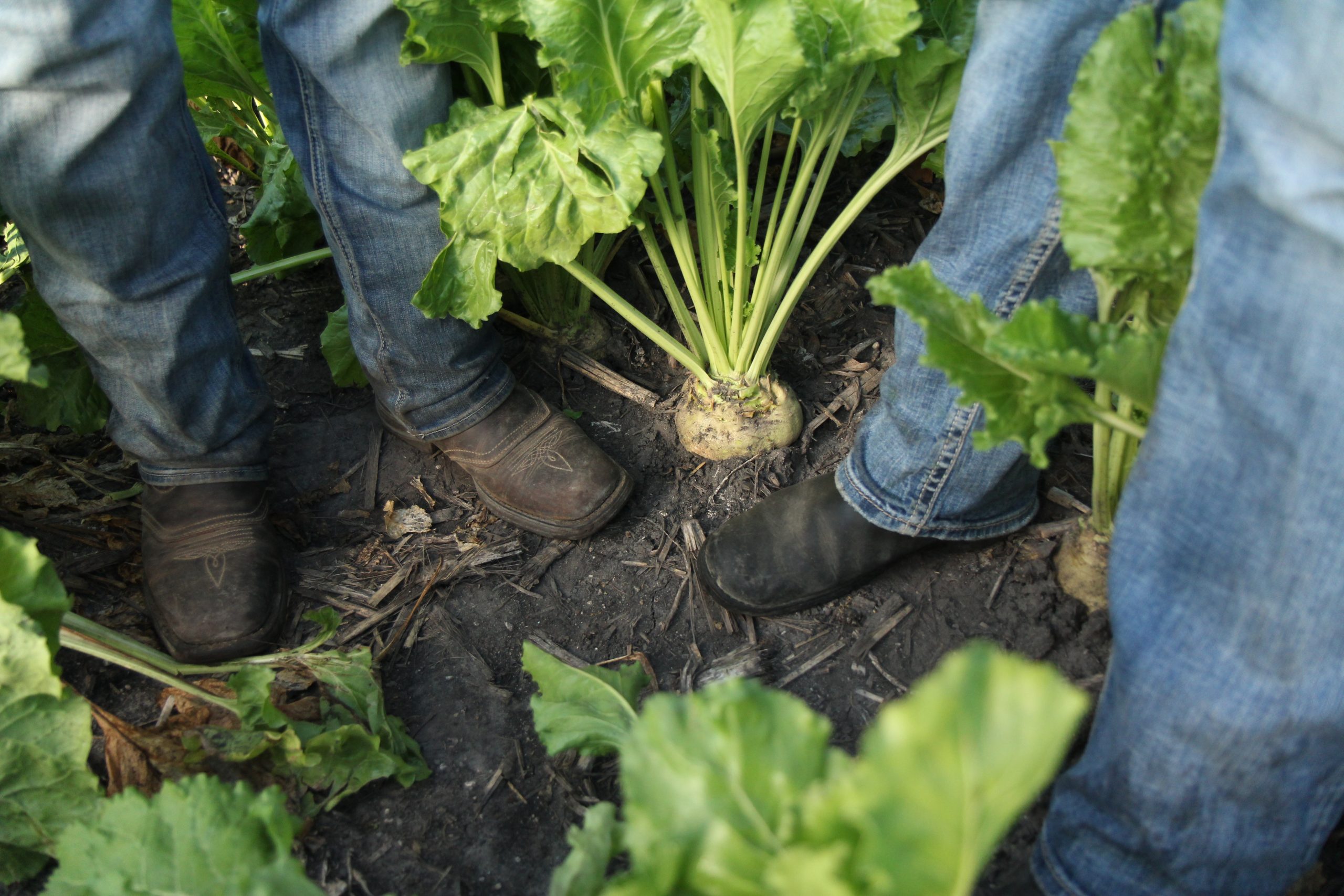
From the Desk of Mike Dohman

Harvest is complete and the results are in.  Hopefully you planted some Seedex.

Overall, Seedex varieties did quite well despite the conditions – late spring planting, above average rainfall and above average disease pressure. In fact, Seedex varieties outperformed competitors by an average of 1.8 ton and.61% sugar in our farm testimonials. That’s not a bad harvest for a year that was less than ideal.

In this year’s coded trials,  had two varieties in the top ten  and three in the top 12.

This year we’ll be offering Nipslt Suite and Metlock as new seed treatment options. These new treatment options are just two ways Seedex uses research to try and help your bottom line.

The time to order is just around the corner. Contact your dealer and learn about which of our latest varieties is right for your field.

And should you get stuck when the snow shows, visit us on Facebook. www.facebook.com/Seedex. We post interesting photos and videos on there, so be sure to “like us” and leave a comment.

Posted in Uncategorized | Comments closed

From the Desk of Mike Dohman

Preharvest has started and the early reports are 20 ton with 16-17 percent sugar. Considering the late spring planting, this is a nice surprise.

There are stories up and down the Valley of fields yielding less and some are being destroyed. The take home message is to make sure you visit with your Seedex dealer to pick the best variety for your specific field in the coming year.  Our research crew has started harvesting the trials and we have a lot of data on disease tolerance.

If you have harvest stories you would like to share,  give myself or your Seedex dealer a call. We welcome your input.

Have a safe harvest.

Posted in Uncategorized | Comments closed

Sugar Producers Need to Fight Proposed Bills

by Klodette Stroh
WIFE National Sugar Chairperson

Published September 9, 2011
Farm & Ranch Guide
Page 13 

To the editor:
Agriculture has deep roots in America’s history.

To insure America’s freedom is to study our past history. This country learned a good lesson years ago. Sugar history shows us that after 40 years, in 1974 when the U.S. Sugar Act expired, the world price skyrocketed to 60 cents a pound. American consumers suffered. Then it dropped to 3 cents a pound and forced many sugar beet and cane farmers out of business, but consumers found no savings in their food prices.

To protect the taxpayers from sugar prices and the insecurity of supply, in 1981 Congress included a sugar program in the Farm Bill. It stabilized the price at a reasonable level, and assured American consumers and giant sugar users such as candy, cereal and soft drink makers a reliable and high quality supply of pure natural sugar.

American farmers are one of the most efficient farmers in their practices. Keeping in mind today’s high cost of production, sugar beet farmers in irrigated areas spend between $1000 and $1100 an acre. On the other hand, sugar cane farmers invest $1100 and $1200 an acre especially around the Florida’s everglades where sugar cane farmers have been sentenced to pay $300 million over 20 years to restore the Everglades.

Comparing American sugar farmers and our industry with foreign countries we discover 110 foreign countries subsidize sugar production, consumption and trade in some way. This makes sugar one of the most heavily subsidized and therefore distorted markets in the world. The present sugar program gives stability to U.S. sugar price and ensures plenty of sugar on our grocery shelves.

The European Union (EU) overhauled its sugar policy in 2005. They sharply reduced their domestic production and became dependent on foreign imports. Now, six years later in today’s highly volatile world sugar market, the consequences of being so dependent on foreign sugar suppliers are starting to surface.

Rationing sugar should bring back a lot of bad memories for America – we were in the same situation during World War II and were forced to ration sugar in 1942 because of foreign supplies dried up.

In fact, our sugar policy is different than EU’s policy because it operates at no cost to taxpayers and without subsidy checks to producers. The sugar program was constructed by Congress to ensure an adequate supply of homegrown sugar and local jobs in rural areas.

Despite the lessons of America’s past and the EU’s present, some in Congress are again looking to make us dependent on foreign supplies. Four bills have been introduced to destroy the sugar program that insures our market with sugar, provides jobs and annual income.

Current bills addressing sugar policy are:

S.25 by Senators Shaheen (N.H.) and Kirk (Ill.) introduced Jan. 25 “stop Unfair Giveaways and Restrictions Act of 2011.” Cosponsors Paul (Ky.) and Durbin (Ill.).

S.685 – Lugar (Ind.) introduced March 30 “Free Sugar Act of 2011.” Cosponsors Paul (Ky.) and McCain (Ariz.).

HR1385 – Pitts (Pa.) – Davis (Ill.) Introduced April 6 – “Free Market Sugar Act.” No other cosponsors.

HR 1739 – Dold (Ill.) – Blumenauer (Ore.) introduced May 5 – “Free Sugar Act of 2011.” Cosponsor Moran (Va.).

America is already more dependent on foreign suppliers than most would think. Trade deals have forced the United States to be the second biggest sugar importer in the world – imports account for approximately one-quarter of the market – and low prices in past years forced 33 U.S. sugar facilities to close between 1996 and 2008.

History is a wise teacher and if we look back and learn from our past mistakes we will prosper from this great teacher.


Posted in Uncategorized | Comments closed

From the Desk of Mike Dohman

Who Upset Mother Nature?!

I have forgotten how long we have been in the current wet cycle.
I will never forget my grandpa’s words of wisdom on the farm. He would prefer a dry year over a wet year any time.

With excessive amounts of rain comes our share of disease. Scouting fields the last couple of weeks, you can see plenty of Aph and Rizoc. Fields that got planted late are struggling the most. The bigger the sugarbeet root, the more natural tolerance there is for the plant to fight off an infection. With the later planting and warmer soil temps, the beet plant is having to fight for its life. In general, the crop is coming along and looks fare for now.

Some dryer weather would sure help.

Anybody have connections with good old Mother Nature?

Posted in Uncategorized | Comments closed

Seedex Disease Spotlight: Rhizoctonia

Rhizoctonia is one of the nastiest sugarbeet diseases. It’s difficult to detect and often goes unnoticed until late in the season. This Seedex Disease Spotlight will give you a quick understanding of how the disease works, what to look for and what you can do to protect yourself.

Cause:

Rhizoctonia is caused by a microscopic fungus. Rhizoctonia solani, sits dormant in the soil until warm and wet conditions make it favorable to strike. The fungus attacks the root of the sugarbeet plants, constricting the flow of precious nutrients.

The result of Rhizoctonia "damping off" a seedling.When Rhizoctonia preys on a young plant, it results in “damping off.” In other words, the plant is damaged or killed before it reaches stable growth. Should the plant reach a stable growth size, the root system will be very weak as a result of the infection. Come harvest time, the damage will be very apparent.

Cost:

An outbreak of Rhizoctonia can be substantial. It’s not uncommon to see a 25% or even a 100% yield loss as a result of Rhizoctonia damage. Even if parts of the crop survive, revenue is affected by:

  • a reduction in sugar content
  • increased tare
  • poor quality due to increased levels of sodium, potassium and nitrogen
  • storage difficulty

Rhizoctonia can even affect the success future rotational crops such as corn or beans.

What to Look for:

One of the main difficulties in treating Rhizoctonia is its difficulty to diagnose properly. Rhizoctonia may be confused with other root diseases such as Pythium or Aphanomyces. Even lightning damage can resemble a Rhizoctonia outbreak.

In foliage, Rhizoctonia appears as limited patches of wilted leaves which spread along the row. Wilting occurs suddenly and gradually evolves into chlorosis or a complete wilting of the leaves. Dead foliage appears as a brown rosette in the middle of the sugarbeet’s crown.


An example of Rhizoctonia root rotIn roots, Rhizoctonia looks like a dark black or brown dry rot. Sometimes referred to as “black foot,” these dark roots can be witnessed at the surface or directly below the crown depending on the severity of the outbreak.

What You Can Do:

There is no immunity to Rhizoctonia. While it’s found in over one third of sugarbeet-growing regions across the US, its complex genetic structure makes it difficult to pinpoint and prevent. While the industry awaits a breakthrough in prevention technology, there are a few things growers can do at the genetic and agronomic levels to resist Rhizoctonia.

Agronomic Measures

Extend your rotation to give yourself a three to five year bugger between sugarbeet crops.

Avoid susceptible crops, meaning supplement corn, beans and sugarbeet with non-host crops.

Maintain a good soil structure. Use appropriate fertilizers, sow a cover crop in the winter, avoid soil compaction and refrain from using heavy machinery in wet or unfavorable conditions.

Seed Varieties

A variety with Rhizoctonia and Rhizomania dual tolerance is an effective solution where Rhizoctonia root rot has been known to exist. Compared to varieties which only protect against Rhizomania, dual-tolerance varieties seem to perform better in terms of yield, sugar content and exractability.

Seedex offers Tandem Technology varieties, specifically designed to give added protection against Rhizomania and Rhizoctonia. Consult your local Seedex dealer to learn more.

Posted in Uncategorized | Comments closed

American Crystal chooses Roundup seed

by Stephen J. Lee

Originally published in Agweek on 4/4/11.

American Crystal chooses Roundup seed

Nation’s largest sugar beet processor decides on Roundup Ready seed

American Crystal Sugar Co.’s board of directors decided recently to use Roundup Ready beet seed this year, despite the threat posed by a federal court case mounted by opponents of the genetically modified product.

“We felt the legal risk remains, but we feel the case is strong,” American Crystal President David Berg says. “The USDA has provided an environmental assessment and said this is a safe technology and given us an agreement we can live under.”

American Crystal, the nation’s largest sugar beet firm, has used Roundup Ready seed for the past three years, with more than 95 percent of the acres planted with GMO seed the past two years.

The seed, like much of the soybeans and corn grown in the region, is genetically enhanced to be immune to the popular herbicide, Roundup, made by Monsanto, which makes weed control easier and more efficient.

Roundup rules

But a two-year court battle with organic crop interest and environmental groups has led to at least one federal judge ordering a halt at one point to using the seed. USDA more recently approved the use of the seed, and at the same time, put out new rules in how it must be handled and used.

For example, the new rules require that seed has more secure packaging, a sort of “triple container” setup, when it’s handled to ensure there is no spillage.

Opponents of such genetic modification say it endangers organic crops and helps breed immunity to herbicides into weeds.

“It’s more restrictive than it has been in the past,” Berg says of USDA’s new rules. “But any farmer who makes their mind up to do it can comply with all the rules.”

Some farmers have said they already decided to plant conventional beet seed, simply to avoid any fallout from the litigation.

Conventional beets require more – and more finely tuned – applications of herbicides, increasing the management stress somewhat to the grower.

There is debate among growers over how much the Roundup Ready seed improves production and profitability. Some say it only is a slim difference between the two types of seed.

GMO a go

Though American Crystal growers have reached record yield levels in the past three years, especially last year’s record crop, some growers say it was more because of nearly ideal growing conditions than the GMO seed.

But the company obviously has decided to go with GMO.

“We have raised and processed (Roundup Ready) beets for three full seasons and had no problems at all, not in the food supply,” Berg says, “This stuff works just fine.”

Berg says it’s up to growers as to how many of American Crystal’s 875 “grower units,” the ones who do the farming among the 2,750 shareholders – would plant conventional seed this year.

The board also decided to authorize growers to grow 425,000 acres of beets this year, the same as last year, Berg said.

American Crystal’s five processing factories in the Red River Valley are on schedule to finish processing the 2010 beet crop within about five weeks, Berg says.

Posted in Uncategorized | Comments closed

Banner Year Comes With Uncertainty

Roundup Ready hot topic at Crystal Sugar meeting
By: Mikkel Pates, Forum Communications Co., INFORUM

American Crystal Sugar Co. shareholders at their annual meeting were happy but not giddy about a phenomenal crop and price year – their enthusiasm perhaps curbed by concerns about future use of Roundup Ready beets.

“Finally!” said Bill Hejl of Casselton, N.D., asked to come up with a single word to describe the year. He said the year will be notable for its high yields, high prices and – bonus – a trouble-free harvest.

Paul Mathiason of Grand Forks said farmers may find a way to “give away” those gains through higher land rent and through paying higher input costs for next year, but he acknowledged that the year could hardly have gone down any better. “If you’re complaining this year, you should probably find something else to do,” he said.

Since November, shareholders have been told they’d likely be paid $57 a ton on the 26.3-ton-per-acre crop in 2010, a gross payment of $1,500 an acre that is a modern record. That could still be revised between now and when the final payment is made in November 2011. In the past few years, projections have been revised upward.

If that holds, the 2010 crop payment will be 25 percent higher than the respectable results from the 2009 crop, when $52.87 per ton of average was paid on a 22.7-ton per acre average – a $1,200-per-acre average gross payment.

David Berg, Crystal’s president and chief executive officer, in his annual address, recounted how the co-op and its shareholders have become more efficient. The co-op harvested 11 million tons of sugar beets this fall and will have a campaign that ran from mid-August to late May.

“That was done on 415,000 acres this year. Thirty or 40 years ago, that would have taken 800,000 or 900,000 acres,” he said.

The company is always looking for new ways to squeeze more sugar from its current assets or “add some assets,” Berg said, but he wasn’t specific about what those investments might be. He said the industry currently is in good shape because of favorable demand.

Berg acknowledged that some growers are suggesting that now might be a time for greater capital investments. One path is increasing the “unit retain” levels to invest in more long-term capital projects. With unit retains, the company holds back a quantity of the payment for seven years, like an interest-free loan from the shareholders to the company. Unit retains have historically been $2 to $3 per ton.

“There’s always discussion” about shifts in unit retains, and Berg acknowledged that “in a year like this, there’s obviously more.”

Uncertainty over Roundup Ready beet technology is the most prominent question for growers in 2011 and beyond.

Federal court actions Aug. 13 made it illegal to plant the glyphosate-tolerant beets, pending further action by the U.S. Department of Agriculture. Planting Roundup Ready beets in 2011 is in question, as well as in subsequent years, pending the outcome of an Environmental Impact Statement.

There also is new court action in California. A federal judge said some beet seed crop planted last summer in Oregon would have to be removed from the ground. Those Roundup Ready seed plants were planted after the judge vacated the deregulation of Roundup Ready sugar beets, even though they were planted under permits by the USDA.

Plaintiffs in the lawsuit contended that the permits should not have been given. One possibility is they’d be removed from the fields but kept alive as in carrot-like sized “stecklings” if the courts allow.

Berg noted the stecklings in the current dispute would come to maturity in 2011 and would be harvested for seed and planted for commercial production at the earliest in 2012, if allowed. Berg said American Crystal has a seed company and some of the acres in question were planted by a competitor.

“I don’t know what our competitors are doing; it’s not legal for me to know that,” he said. “I don’t know what the volumes are and I can’t give you a real good idea about the impacts on seed.”

The issue of how to prepare for a non-Roundup beet year in 2011 continues to be negotiated between beet and chemical companies, as well as seed companies. The companies are negotiating volumes that may be needed, which could be affected by whether growers in other areas of the country decide to grow beets at all.

Scott Anderson, a Minnesota sales representative for Dow AgroSciences, with more beets in his territory than any other representative nationwide, said his company is one of three major companies that traditionally supplied components for “micro-rate” control herbicides in sugar beets, prior to Roundup Ready beets conversion.

Posted in Uncategorized | Comments closed

Our Thoughts and Prayers Go Out to Forsman Family

Robert Forsman passed away on October 11, after being struck by a train earlier in the week. He was hauling sugarbeets near Fisher, Minn. when his truck was hit by an oncoming train. Everyone in the sugarbeet industry is family, so its always difficult to lose one of our own.

The accident is a tragic reminder to stay safe this harvest. High stress and long hours affect us all. Please use caution throughout the remaining harvest. We’re all in this together.

On behalf of Seedex, Inc. and our network of dealers and growers, our sincerest condolences go out to the Forsman family, friends and neighbors.

Posted in Uncategorized | Comments closed

A Sugarbeet Festival? ‘Bout Time

Mead, Colorado hosted its fifth annual Mead Sugar Beet Festival in late September. The event celebrates the history of the sugarbeet and its importance to that region. It’s a fact that no one produces more sugarbeets than the Red River Valley, but it would be hard to prove anyone throws a better sugarbeet bash than Mead.

It’s great to see other communities celebrate a crop that means so much to our region, our nation and our world. The next time you can break away from the field in late September, it might be worthwhile to take the kids on a roadtrip to Mead, to take in the festival.  See how sugarbeets were harvested in the early 20th Century, might make us a little more appreciative of our farms, equipment and seed varieties today.

With this year’s record harvest, we may want to throw our own party and show Mead how it’s done!

Posted in Uncategorized | Comments closed

2010 Strip Trial Results Available Now

About our Grower Strip Trial Results

I hope this letter finds you pleased with your 2010 beet harvest and results. It seemed a very good year for most growers in most areas. Now if we only knew what 2011 will bring and what we’ll be able to plant!

This issue includes our Grower Strip Trials and as you can see they are all Roundup Ready® varieties including our commercial varieties and new experimental varieties. At this time we still cannot plant RR in 2011, but want you to see the varieties we’ve been working on for you.

I also wanted to explain how our strip trial process works. Every plot is planted and harvested using the grower’s equipment. We bring the seed, a generator and a vacuum. We help fill the grower’s planter with the Seedex varieties we want to test and any other varieties the grower has purchased and wants to compare them to. We plant a full round the length of the field. During the growing season we take stand counts and notes on disease tolerance, etc.

At harvest we lift the length of the field and send the truck to the factor or piler regardless of how full it is. The truck is weighed and samples are taken for quality along with any tare sample and left to be processed through the factory labs. Once the grower receives his analysis from the factory he shares a copy of the results with us.

We feel grower plots are an unbiased way to compare varieties on their farm; planted, managed and harvested the way they do the rest of their beets. If you have any questions or would like more information on any of our Seedex varieties please contact your local dealer or me!

Thank you,

Michael Dohman

View the 2010 Grower Strip Trials: All Locations, Climax, Drayton, Eldred, Foxhome, Hillsboro, Kent, Nielsville and Ulen

Posted in Uncategorized | Comments closed