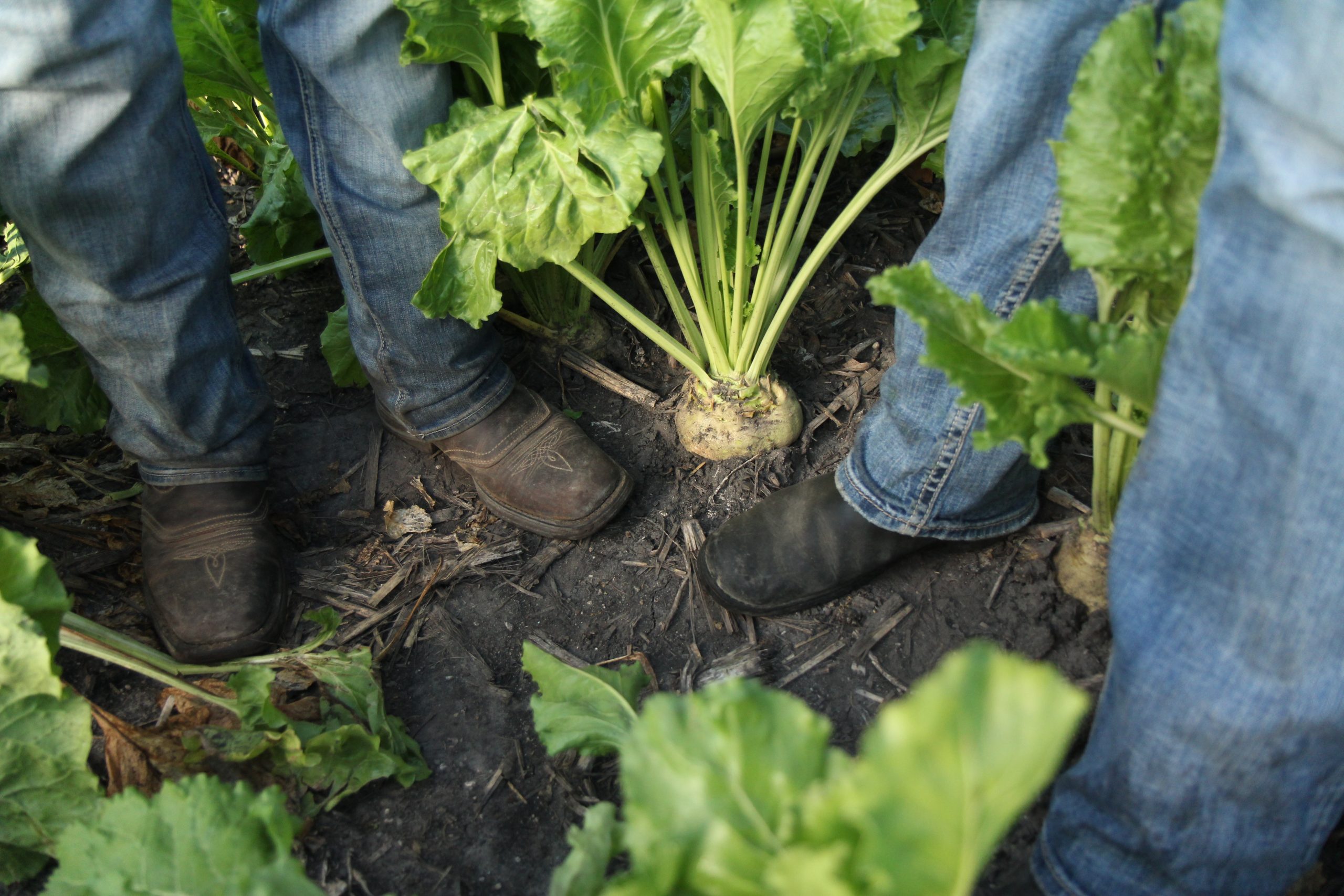
Rhizomania (RZM) is one of the most prevalent diseases in many sugarbeet growing areas today. That’s why many, if not all varieties sold today contain the Holly gene for RZM tolerance. In some areas growers are seeing increasing RZM pressure each year, but Seedex has the answer for growers in 2010. The answer is Tandem Technology®,
Our new variety, DeuceTT, is a newly approved Tandem variety available for our American Crystal customers. Tandem Technology varieties have double tolerance to RZM, because they include RZM tolerance on both genetic parents, the male and female side. The combination of both offers unparalleled tolerance to RZM. This allows Tandem varieties like DeuceTT to out-yield all other varieties in severe RZM areas. Watch for results on DeuceTT in our grower strip trials and the coded trials.
Talk to your local Seedex Dealer if you are interested in double RZM tolerant DeuceTT for your farm in 2010! Tandem Technology® is a registered Trademark of SESVanderHave.
New Variety SEEDEX DEUCE TT
XBEET COMES STANDARD
Seedex was the first sugarbeet seed company to offer all their varieties primed with XBEET and for the 2010 season, all Seedex varieties, both Roundup Ready® and conventional will once again come standard with XBEET. Adding XBEET to the already strong vigor and fast emergence of Seedex genetics means more benefits to our customers:
• Accelerated and More Uniform Emergence
• Enhanced Vigor and Vitality
• Lower Stand Loss resulting in Higher Plant Populations
• Higher Recoverable Sugar
• Bigger Yields
• Better Bottom Lines
XBEET is a priming process done by Germains Technology Group, that uses a specifically calibrated combination of heat and moisture to remove or weaken germination inhibitors in the cork of the raw seed. It also starts the germination process that naturally occurs in the field until the seed reaches a certain physiological point. Then the process is stopped and the seed is boxed and ready to be delivered to growers.
Once the grower plants his Seedex XBEET seed, it absorbs moisture and starts the germination process just where it was left off. Because the seed is allowed to naturally return to the germination process, it takes off quicker. This fast emergence leads to stronger stands and less risk of crop loss. The emergence speed of Seedex varieties enhanced with XBEET means Seedex will be the first out of the ground. Period
XBEET lessens the effects that harsh spring conditions might have on your beets, at the most vulnerable time in a sugarbeet plant’s life. Independent studies and our research at Seedex has shown that in over 5 years of testing XBEET provides 3-4 days faster emergence, a more uniform stand, a 5% increase in final stand and a 1-2 ton increase in yield. Sugarbeet growers have experienced these benefits the last few years and want their seed primed with XBEET. It’s no wonder why Seedex made it standard on all its varieties!
Photographic hobby reflects love of hometown
by Jennifer Johnson • Daily News, Wahpeton, ND

This photo of the "Morning Harvest" was shot outside of Breckenridge in 2006. DeVries typically takes photos that celebrate Wahpeton and the surrounding area. "It's always good to have a stock of pictures, whether it be around the city or work or whatever the case may be," he said. photo by Chris DeVries
Minn-Dak Farmers Cooperative Communications Manager Chris DeVries has been a novice photographer for years, but his work will soon be reaching the public on a larger scale.
Within the next few weeks, DeVries’ photos of local residents, scenery and landmarks will be featured on the city of Wahpeton Web site. The project started before he joined the city council nearly two years ago, when he wanted to stockpile as many photos possible for promotional purposes.
“I thought, you know, we need to promote the town,” he said. “I grew up here and I know what Wahpeton has to offer. I have a real interest in the town’s success.” His interest in photography started when he was hired at Minn-Dak for a public relations position in 2004. With a new Sony on hand, he was able to capture images for the company Web site and feed into his new hobby.
“I’m a pretty visual person. Whether it be family or work or the city or whatever, I enjoy having that documentation,” he said. “It’s a way to preserve something.”
His photography tends to capture extreme colors and the sentiment of small town living – one photo features children on the playground, another reveals a family gathering around the table for dinner framed by Christmas lights hanging from the rooftop. There’s a bit of nostalgia in the images, too, and part of it results from DeVries’ fond memories of his youth in Wahpeton. Many of his favorite spots, such as the Blue Horizon roller skating rink and Spies grocery store, have vanished.
“All the things I remember from being a kid aren’t the same anymore, and I really wish I had pictures,” he said. “I’m hoping what I’m doing now will be nice for the kids, too, someday.”
DeVries takes a simplified approach to his work. As he’s inspired by the quiet, everyday moments of life, his growing portfolio includes a vivid blue peacock at Chahinkapa Zoo, snow-covered trees in the park and Wahpeton’s Homecoming Parade. Although he hasn’t invested in expensive lighting equipment or other means, he enjoys framing each shot to give the viewer a different perspective. He referred to a quote by Henry David Thoreau – “It’s not what you look at that matters, it’s what you see.”
“It’s pretty much perfect for what I do,” he said.
DeVries intends on expanding his portfolio by including other cities, such as Fargo and Minneapolis, in the future.
Judge’s ruling forces second look at Roundup Ready sugarbeets
By DALE HILDEBRANT, Farm & Ranch Guide
For the second time in two years, a ruling by a U.S. district judge based in San Francisco has thrown a roadblock in the path of ag chemical giant Monsanto.
Back in 2007 Judge Charles Breyer halted the use of Roundup Ready alfalfa seed and on Sept. 21, 2009, Federal Judge Jeffrey White challenged USDA’s approval for Roundup Ready sugarbeets, saying further environmental studies needed to be done.
The ruling was issued even though the sugarbeets have been widely grown in Wyoming since 2007 and in this region since the 2008 growing season.
White found that the USDA’s Animal and Plant Health Inspection Service (APHIS) violated environmental law by failing to take a “hard look” at whether Roundup Ready beets would eventually share their genes with other crops such as chard and table beets.
Heavy rains give harvest a beeting
By: Jon Knutson, INFORUM, Fargo Forum
AMENIA, N.D. – Seven good days.
That’s what Amenia farmer Bill Hejl needs to finish this year’s sugar beet harvest.
“We just need some dry weather,” said Hejl, who had to shut down his sugar beet harvest after receiving about 3½ inches of rain in the past week.
He’s not alone.
Most sugar beet producers in the southern two-thirds of the Red River Valley have quit harvesting temporarily because of recent rains.
They likely won’t go again for another week or so, given current forecasts.
“It’ll probably be a week, depending on the weather,” Paul Coppin, general manager of Reynolds United Co-op, said of the resumption of sugar beet harvest in his area.
The northern Red River Valley – or the area north of U.S. Highway 2 – has had less rain, and many farmers there are able to keep going, said Dan Berhardson, director of agriculture for Moorhead-based American Crystal Sugar Co.
“We’re still going,” said Kelly Erickson, who raises sugar beets in Hallock in extreme northwestern Minnesota.
“It’s a challenge to get the beets. But the good news is, we’re still going,” he said.
Most of the sugar beets in Minnesota and North Dakota are grown in the Red River Valley by shareholder/members of American Crystal and Wahpeton-based Minn-Dak Farmers Cooperative.
The two co-ops have a major impact on the region’s economy.
In fiscal year 2008, American Crystal had net revenue of $1.223 billion, and Minn-Dak had $243 million in net revenue.
Though recent rains hurt, the situation isn’t desperate yet for sugar beet growers, provided the weather turns dry quickly.
About a quarter of the area’s beet crop already has been harvested.
Twenty-four percent of North Dakota’s sugar beets were lifted, or removed from the ground, as of Sunday, according to the U.S. Department of Agriculture.
That compared with an average of 30 percent in 2004-08.
In Minnesota, 23 percent of beets were harvested as of Sunday, down from the 2004-08 average, the USDA said.
Crop conditions in both states generally are good.
In Minnesota, 70 percent of sugar beets are rated good or excellent, with 27 percent fair and 3 percent poor or very poor, the USDA said.
In North Dakota, 66 percent of beets are good or excellent, with 26 percent rated fair and 8 percent poor or very poor, the USDA said.
But recent rains stir memories of a year ago, when heavy, persistent October rains hammered sugar beet fields, particularly in the southern Red River Valley.
Minn-Dak growers were forced to leave sugar beets valued at $36 million in their fields.
It’s far too soon to say things will be that bad again, said Chris Devries, Minn-Dak communications manager.
Dry weather is what sugar beets fields need now, said Claude Richard, a Fargo producer.
“No more rain this fall and then some snow for Christmas. That would be great,” he said.
Rain slows beet harvest
By: staff report, Grand Forks Herald
GRAND FORKS, N.D. – Wet weather has slowed the sugar beet harvest in parts of North Dakota.
Jerry Christenson with American Crystal Sugar said harvesting is at a standstill south of Highway 2, but conditions are better north of there.
He said the harvest normally takes about three weeks, but could last up to a month this year.
Christenson said rain delays during the harvest aren’t that unusual.
Valley beet harvest began at midnight Tuesday, Sept 29
INFORUM, Fargo Forum, Sept 30
After a month of preliminary digging, the American Crystal Sugar Co. beet harvest began full tilt at midnight Tuesday, meaning hundreds of big trucks will be rumbling over roads up and down the Red River Valley. The “stockpile” harvest start was moved up one day from its traditional first minute of Oct. 1 because of forecasts for rain Thursday and Friday, according to the company’s Web site late Tuesday.
Stockpile harvest, after a month of “pre-pile,” brings a safety concern that American Crystal takes seriously, a company official said. The company issues cautions to growers and residents to watch for the stepped-up harvest and road activity, said Jeff Schweitzer, spokesman for the Moorhead-based, grower-owned cooperative.
In fact, an 18-year-old woman was killed Tuesday afternoon in Wahpeton, N.D., in a three-vehicle accident that included a semi-trailer hauling beets for the other sugar beet cooperative in the southern the valley, Minn-Dak Farmers, the North Dakota Highway Patrol said.
The patrol said Antoinette Gjesdahl was driving a 2005 Pontiac about 1:30 p.m. and entered an intersection on the Interstate 29 bypass on the west side of Wahpeton when her vehicle was hit by a 2005 International semi-truck and trailer driven by Cathleen Dean that was hauling sugar beets from Barney, N.D., to the Minn-Dak processing factory in Wahpeton. The Pontiac was pushed into a third vehicle at the intersection, driven by Mary Motzko, 38, of Wahpeton. She and the truck driver were taken to the local hospital for treatment; Gjesdahl was dead at the scene, the patrol said. The crash is being investigated.
A ton of trucks
American Crystal’s 875 growers will gear up several thousand trucks to move the beets from their fields to one of dozens of field stations, and Transystems Inc. will run its dozens of semi-trucks hauling the beets from stations into the five processing factories in East Grand Forks, Crookston, Moorhead, Hillsboro, N.D. and Drayton, N.D.
During the preliminary “pre-pile” period of beet digging in September, the growers harvest about 10 percent of their crop to get the factories up and running for the processing campaign that will continue until the end of May.
The stockpile harvest that usually begins the first hour of Oct. 1 just about every year can take 10 to 20 days, with some growers digging 24 hours a day, and others on 12-hour shifts, depending on the schedule of the grower-owned co-op.
There always is a rush to the stockpile beet harvest as the valuable but bulky crop needs to be dug and hauled in fast because October weather isn’t always cooperative, Schweitzer said.
The average yield looks to be 24 tons an acre, which means several truckloads per acre will need to be hauled for each of the 442,000 acres to be harvested in the Valley. It adds up to lots of extra truck traffic.
“So, safety is a big focus for shareholders,” he said. “It’s important that everyone goes about their business in a safe manner.”
Statements by the Sugar Industry Biotech Council on US District Court Decision
September 23, 2009
On September 21, 2009, U.S. District Court Judge Jeffrey White ruled that the U.S. Department of Agriculture (USDA) will have to complete an Environmental Impact Statement for Roundup Ready sugar beets. This is a procedural decision, in which the court concluded USDA needs to show a more thorough review process than was documented in the deregulation process the agency completed in 2005.
While the Sugar Industry Biotech Council is disappointed by the outcome, we look forward to the next phase of the proceedings and the opportunity for growers, processors and seed producers to advocate the need for this technology and vigorously defend farmers’ freedom to plant Roundup Ready sugar beets.
This ruling found no issue with the safety or benefits of Roundup Ready sugar beets. The sugar from biotech sugar beets is the same as from conventional sugarbeets and sugarcane, and is widely accepted in the United States and worldwide markets.
Farmers in the United States and Canada are choosing to plant Roundup Ready sugar beets on 95 percent of the acreage because of the environmental and economic benefits they bring to farming operations.
Judge overturns government approval of “Roundup Ready” sugar beets
U.S. District Judge Jeffrey White in San Francisco found the U.S. Department of Agriculture’s Animal and Plant Health Inspection Service violated environmental law by failing to take a “hard look” at whether “Roundup Ready” sugar beets would eventually share their genes with other crops.
Noting that pollen from genetically altered sugar beets could be blown by the wind long distances to related crops, such as chard and table beets, the judge ordered the agency to produce an environmental impact statement examining the issue.
“The potential elimination of farmers’ choice to grow nongenetically engineered crops, or consumers’ choice to eat nongenetically engineered food … has a significant effect on the human environment,” White wrote.
The plant inspection agency is reviewing the ruling, said spokeswoman Suzanne Bond.
A lesser level of review, known as an environmental assessment, found no significant impact from introducing a ground bacteria gene tolerant of the herbicide into the sugar beet genome, noting that if pollen spread the genes to wild beets, they were considered a weed, and no cause for concern.
The ruling was a second blow for St. Louis-based Monsanto’s Roundup Ready crops. While soy beans, corn, cotton, and canola genetically engineered to withstand the company’s popular weed-killer have been in wide commercial production for years, a similar ruling in 2007 forced a ban on planting Roundup Ready alfalfa until a re-examination was done. That environmental impact statement is not yet done.
It was not immediately clear what impact the ruling would have on the U.S. sugar crop, about half of which comes from Roundup Ready sugar beets. The judge did not address the harvest of the current crop. Roundup Ready beet seed saves growers on labor, fuel costs and equipment wear.
But the organic farmers, food safety advocates and conservation groups that brought the lawsuit will ask the judge Oct. 30 for an injunction banning new plantings until the re-examination is done, said Earthjustice attorney Paul Achitoff.
American Sugar Beet Growers Association spokesman Luther Markwart said he did not know how much nongenetically altered seed was available if the judge grants the ban.
“Clearly we are going to vigorously defend our farmers’ freedom to plant Roundup Ready sugar beets,” Markwart said. “All this has to do with how we make our case.”
Most of the seed is produced in Oregon’s Willamette Valley, but the crop is grown on 1.1 million acres in 11 states from Michigan to California, Markwart said.
Frank Morton, an organic seed grower in the Willamette Valley town of Philomath and plaintiff in the lawsuit, said steps were taken to keep similar crops apart to prevent cross-pollination, but Roundup Ready seed growers would not divulge which fields were growing genetically altered crops.
He added that he had to pay $300 each time he tested his seeds for genetic contamination, and the first time it is found the crop becomes worthless.
“This industry could be destroying the crop value of organic growers and organic growers would not have the slightest idea they were in danger until their stuff turned up contaminated,” he said. “This is why I made a stink about this.”
Achitoff said besides genetic contamination, they were concerned Roundup Ready crops were creating new strains of weeds resistant to herbicides.
Monsanto spokesman Garrett Kasper said from company headquarters in St. Louis that the ruling was largely procedural and did not question the safety of Roundup Ready crops.
“The issue of weed resistance, as far as we are concerned, is something that is able to be controlled through the properties of chemicals and working with our technical advisers in the field,” he said. “Roundup Ready technology uses less herbicide than conventional, which is why it was so readily adopted by growers.”
BetaSeed Inc. in Tangent, which produces sugar beet seed, did not immediately return a call for comment.
Montana sugar beet growers report sweet season; profits are at 28-year high
By: Staff Writer, The Missoulian
BILLINGS – Sugar beet growers in Montana say they’re having a sweet season.
Profits are at a 28-year high – with prices nearing $50 a ton – thanks in part to a world sugar shortage. Mike Hoffer with Western Sugar Cooperative says farmers in the Billings area are seeing a bumper crop, with an average yield of 31 tons per acre.
Not all farmers in the Western Sugar Cooperative are faring so well. Hoffer says more than 60 percent of the farmers in Colorado and Nebraska had crops damaged by hail.
The world sugar shortage has been driven by drought in India and cane sugar ethanol production in Brazil